
Why do we lie?
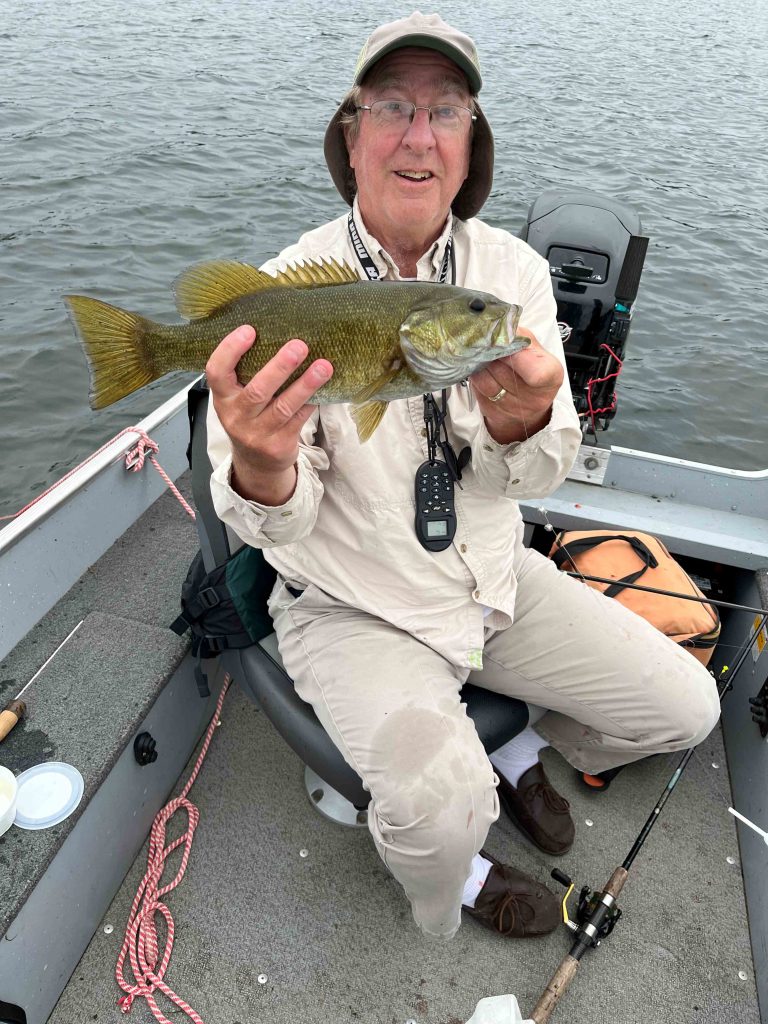
All fishermen are liars. It’s an occupational disease with them.”
— Beatrice Gray Cook, “Till Fish Us Do Part: The Confessions of a Fisherman’s Wife”
Golfers are known for taking mulligans, using the “foot wedge,” and taking gimme putts from beyond actual gimme distances. The annual World’s Biggest Liar Championship excludes politicians on the grounds that they are “professionals.”
But perhaps no group has a bigger stigma for dishonesty than anglers. Want proof? Walk into any woodsy gift shop here in the north and you’re likely to find a Fisherman’s Ruler with interesting markings. In almost any outdoor sports shop you can buy a scale with the brand name Fisherman’s De-Liar.
I’ve been an angler almost since I graduated from the high chair. I can’t deny the temptation to stretch the truth on occasion. Maybe in the telling I’ve rounded the length of a northern pike not to the nearest but to the highest inch. Or may I’ve used a somewhat generous estimate of the number of walleyes caught and released on a given outing. I have a theory that angling taps into a competitive streak in humanity: it’s one reason we have fishing tournaments. I’m tempted to describe it as a macho thing, but then women fish in tournaments, too. And I’ve seen my own daughter get huffy when being outfished by her husband (and vice versa).
The tendency to distort the truth (and the fish themselves) extends to fish photos. Any self-respecting angler knows to hold the fish at arm’s length, close to the camera, to make it look bigger. Here the size of the hands in the image is the tell. The bigger the hands, the greater the photographic exaggeration. The late Vern Arendt, a superb photographer for the Ozaukee Press based in Port Washington, said he always shot fish with a wide-angle lens to make them look much larger. At a workshop of his that I attended, he observed, “It’s not deceiving the public. The length and weight are in the caption.” He had a point: The bigger the fish, the more visual interest.
All well and good. But now comes artificial intelligence – AI. A recent article in The Atlantic magazine, headlined “Bait and Switch,” noted, “Fishermen have always exaggerated the size of their catches. But AI has taken the practice to a different level.” Thanks to AI, says this piece, you don’t even need to have caught a fish to lie about one. The story reports AI imposters on Fishing Instagram, and cites editors of fishing magazines as concerned about AI fakes in freelance picture submissions.
“Sometimes, the fraud is egregious,” the writer states. “One of my friends, a fishing photographer, discovered that another angler had stolen one of his photos and crudely replaced my friend’s face with her own. “More often, the distortions are subtle. Typically, a fish or fisherman looks ever so slightly off, usually in ways that a casual observer might not notice: A bass’s fins aren’t quite right, or the lure in its mouth looks oddly distorted, or the angler’s arms are a bit too long.”
As AI gets better, the fakes will become ever more convincing. So is this what we’ve come to? Where we outsource even the age-old art of angler prevarication to the machines? Heaven help us all.