
Silence of the Loons?
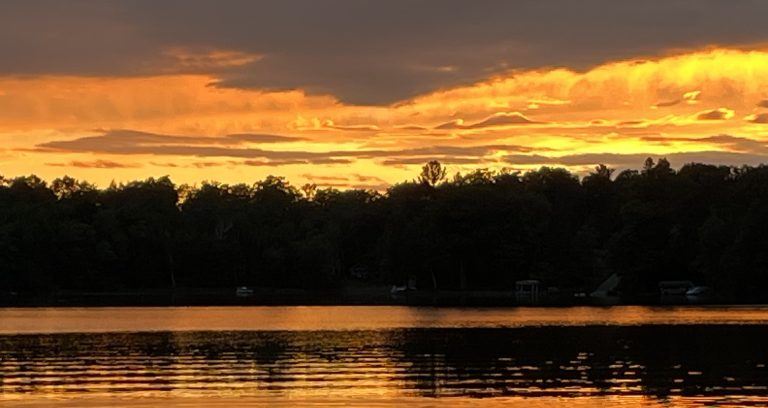
“And when the dawn wind stirs through the ancient cottonwoods, and the gray light steals down from the hills over the old river sliding softly past its wide brown sandbars – what if there be no more goose music?”
— From Aldo Leopold essay, “Goose Music”
Walter Piper of The Loon Project (www.loonproject.org) says he “cannot help feeling like a voice crying in the wilderness” about the prospects for loons here in in the north. His studies have shown loon populations in Wisconsin headed downward since 2019. In particular, he has observed a “sharp die-off of young adults 2 to 4 years of age” in Wisconsin. “I have shared this ill news with everyone who will listen,” he writes in a post on his blog.
Meanwhile, he has also seen warning signs in his project study area in Minnesota. In 2024, Piper and his research team observed only one of the chicks they had banded there. After 2025, “only four of 64 Minnesota chicks had been observed as adults.”
As of this year, out of 87 chicks banded in Minnesota, only nine had returned to the breeding grounds: “The 10.3% rate of chick return is quite close to the 12 of 96 chicks (12.5%) that have returned in our Wisconsin Study Area during the same period. Both figures are far short of the ‘normal’ rate of 35 to 40% of all chicks returning that we had recorded in the early 2000s.
“In short, loon chicks are simply not surviving to adulthood anywhere near as well as they did two decades ago.” As for the cause of decline, Piper has hypothesized a connection to seasonal decreases in water clarity, possibly from dissolved organic matter and sediment wash into lakes by heavy rains, or to algae fed by fertilizer, pet waste and other pollutants from lakeside lawns.
Murkier water hinders adult loons’ ability to locate and capture the fish they feed to their young. Loon chicks have only about three months to consume the food and energy they need to mature and become self-sufficient and healthy enough to reach breeding age. And more challenges beset loons: Loss of shoreline nesting habitat, mortality from ingesting lead split shot and jigs, conflicts with careless boaters, a warming climate tending to push their breeding range northward.
KARE-TV in the Twin Cities created a news story highlighting The Loon Project’s findings; you can search it up at “Researchers sound the alarm about Minnesota’s youngest loons.”
Meanwhile, Piper writes, “I feel that if people understand the degree of decline and understand further that the decline has only grown worse since my first publication on the issue, they will help me work to turn things around. Yet few folks to whom I impart this message seem to show an appropriate level of concern…”
And so, with apologies to Aldo Leopold, When the evening coolness settles over the Northwoods lakes, and the sun slips behind the shoreline pines and hemlocks, and still water mirrors a flaming sky – what if there be no more loon music?